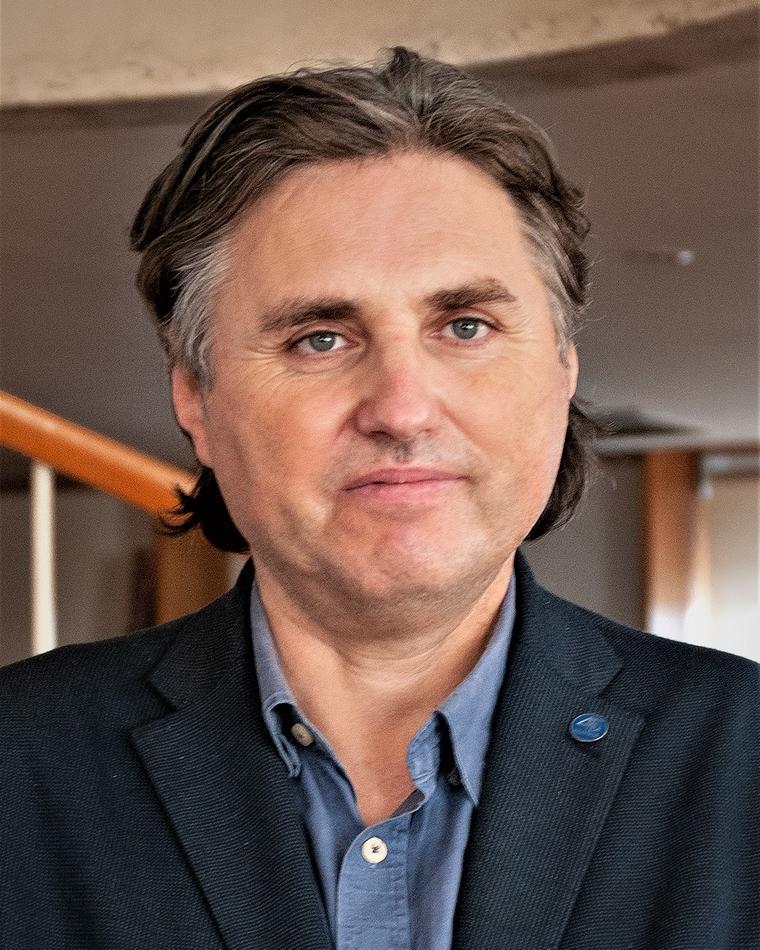
 Octavian Adrian Postolache
KEYNOTE LECTURE
Merging Smart Sensors, IoT, AI and Digital Twins Technologies for Digital Transformation in Agriculture
Octavian Adrian Postolache
Instituto Universitário de Lisboa, Portugal
ABSTRACT
The predicted growth of the world population by more than 80 million implies that by 2050, there will be more than 9 billion people living on the Earth, where 66% of the world population will live in cities. However, the available areas for agricultural production will not be increasing due to factors such as global warming. In this context the agricultural sector needs to be able to produce more food with fewer resources. The Future of Agriculture is dependent on the digital transformation of this field of activity where technologies such smart sensors, IoT, artificial intelligence (AI) and digital twins (DT) might be successfully applied.
Digital twin (DT) is one of the key concepts of Agriculture 4.0, being a data-driven, digital replica of a real-world object or environment. DTs show great potential to improve both efficiency and sustainability and are able to remove key constraints of human observations and interactions particularly in the farming area. Once a DT is created, it can be linked to agricultural equipment or field using smart sensors and actuators as part of an Internet of Things (IoT) Ecosystem. With this link, a DT is able to replicate the states and behavior of the physical system or environment (e.g. irrigation system, vinery) in a digital environment. Time and spatial constraints associated with human observations can be overcome, considering observations that can be carried out in digital environment based on augmented or mixed reality technologies.
This lecture focusses on the digital transformation of Agriculture where technologies such as smart sensors and IoT provide data from in-situ and remote measurements. Data-driven models that can improve decision-making and practices helping farmers work more precisely, efficiently and sustainably are discussed and how the Digital Twins may affect the future of the agriculture. Is DT a technology that can help in decision in the context of heavy uncertainty associated with climate change. Elements of the IoT ecosystem that support the digital transformation of the agriculture will be discussed including multimodal sensing and artificial intelligence. Related to sensing as part of the IoT ecosystem in-situ sensing solutions for soil characteristics monitoring and communication protocols strengths and drawbacks are considered. UAV and satellite imagery solutions as well as the relation between the data coming from the smart sensors distributed in the field and acquired images using multispectral imagery will be part of the presentation.
Another important aspect of precision agriculture is the development of AI models for farming operations considering data coming from different sources. Particularly, examples of smart irrigation and nutrients delivery will be part of my talk.
The application of Digital Twin in agriculture is possible due to the confluence of different technologies that assures improved monitoring, such as sensors and devices, ubiquitous connectivity and computation, and advanced modeling based on AI. Special attention is granted to AI techniques such as machine learning, deep learning and explainable artificial intelligence (XAI) and AI multi-source data-driven models supported by edge and cloud computational platforms. All of these are considered to contribute for improving crop quality and yield through the optimization of farming operations such as irrigation and nutrients delivery.
Concluding, the digital transformation in agriculture should involve all stakeholders, including farmers, researchers, developers, and policymakers, who should work together to strike a balance between technological advancements (including sensing, instrumentation and measurements latest advancements) and the ecological wellbeing, preserving our natural resources and habitat.
SPEAKER BIOGRAPHY
Dr. Octavian Adrian Postolache is an electrical engineer and Associate Professor with habilitation at ISCTE-Instituto Universitario de Lisboa and a Senior researcher at Instituto de Telecomunicacoes, Lisbon, Portugal. His fields of interest are smart sensors, WSN, IoT for precision agriculture, artificial intelligence for automated measurement systems, and intelligent transportation. Dr. Postolache is the author and co-author of 10 patents, 12 books, 21 book chapters, and more than 400 papers in international journals and indexed conferences with peer review. He developed important research work in the field of environmental monitoring and he participate as a PI or member in national and international Agriculture 4.0 projects such as AGROECOINN and SmartFarm 4.0 Colab. He is an IEEE Senior Member, chair of IEEE IMS TC-13, and current chair of the IEEE IMS Portugal Chapter. He is an Associate Editor of IEEE Sensors Journal, IEEE Transaction on Instrumentation and Measurement, and IoT from Elsevier. He received IEEE outstanding reviewer and the outstanding associate editor from IEEE Transactions in Instrumentation and Measurement and IEEE Sensors Journal and other awards related to his research activity at different international forums.